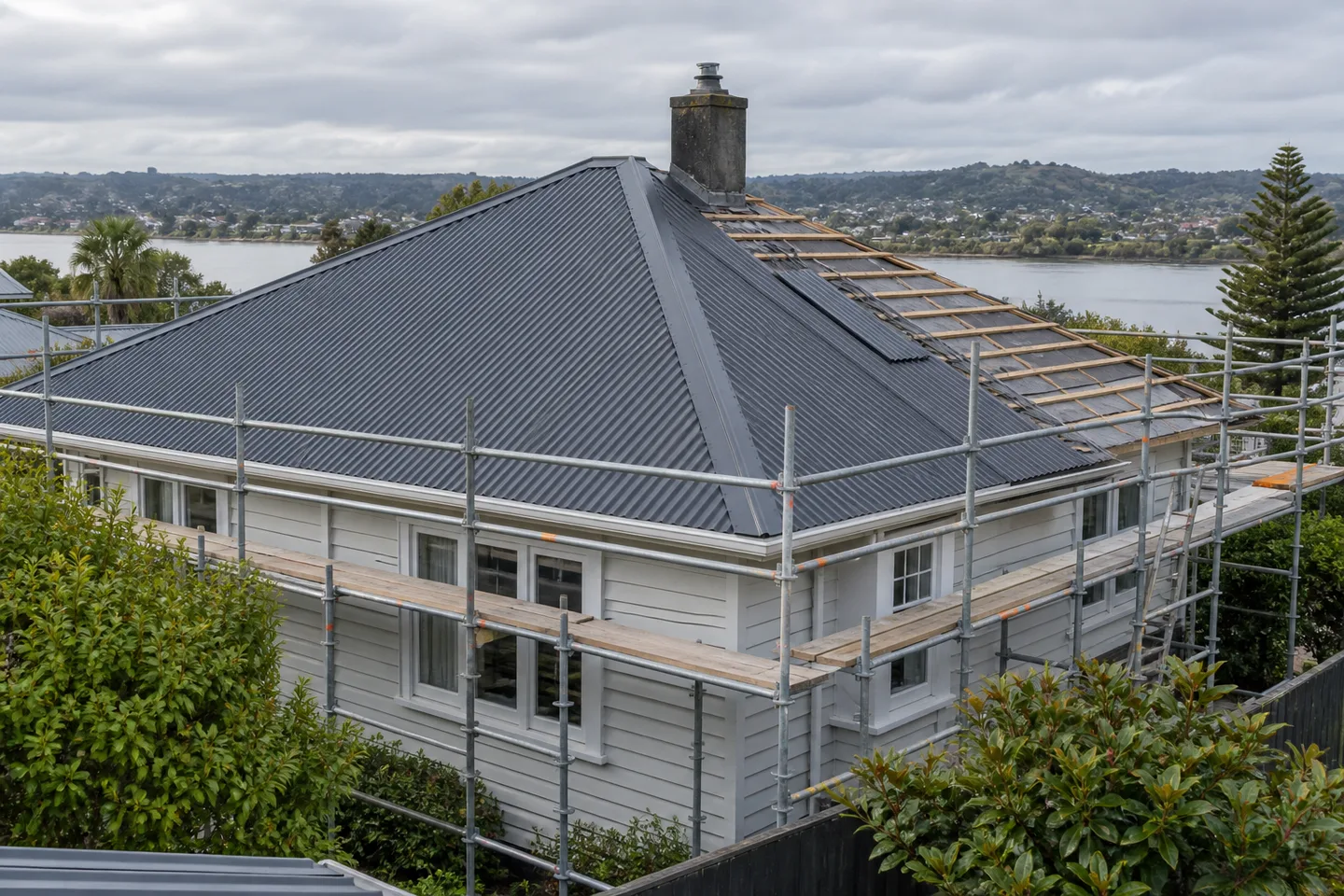
Roof Replacement
Plan a re-roof around the condition of your existing roof, the right materials and everyday life at home.
View serviceBuild & renew
Corrugated Roofing in Whanganui: match the corrugation to the roof geometry, exposure and character of the house.
06 880 1066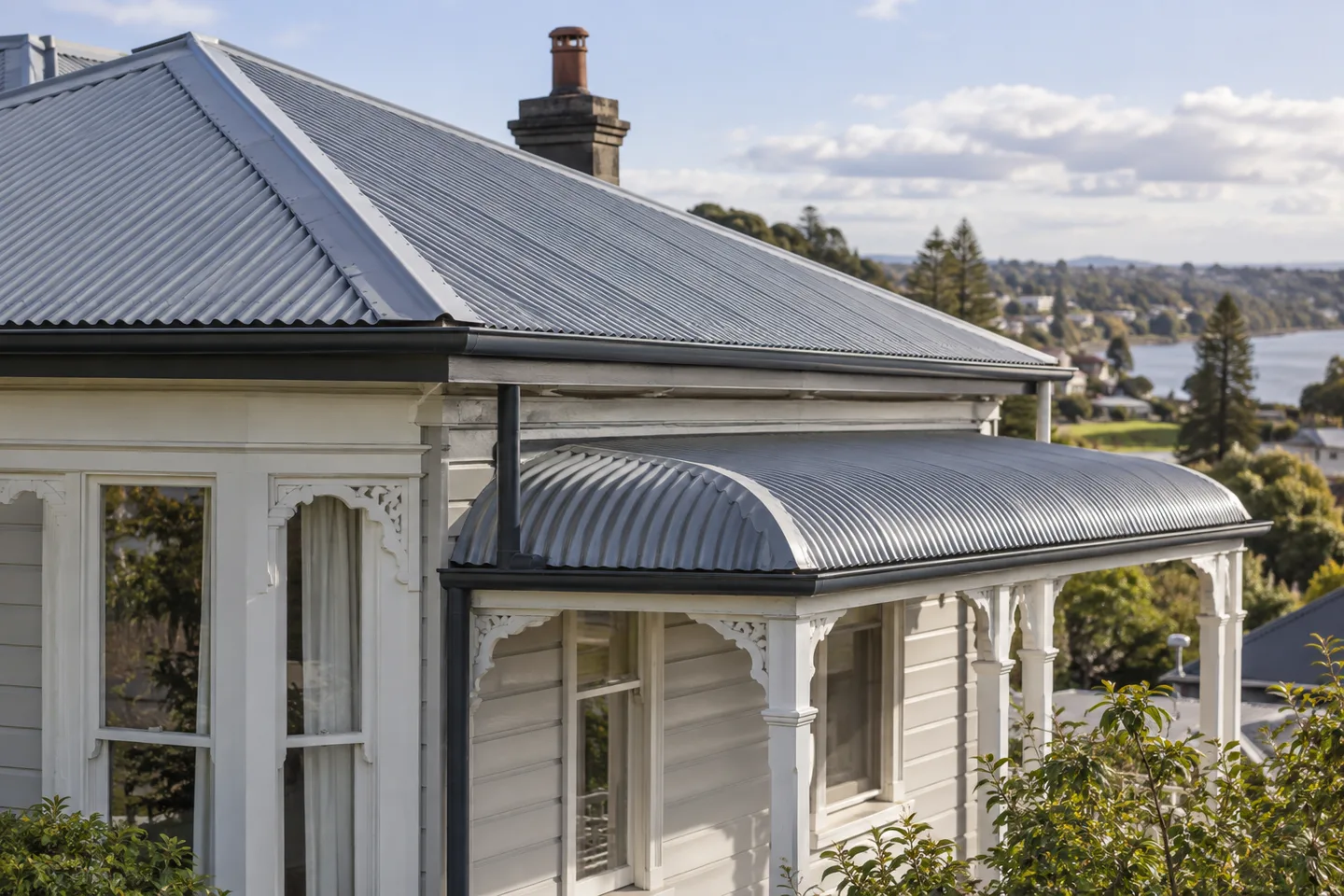
Let’s start with your property
Corrugated iron has been the standard New Zealand roofing profile for generations, and it's still one of the most cost-effective options for Whanganui corrugated roofing on homes, sheds and outbuildings. The small, closely spaced ribs give it good strength for its weight and a classic look that suits villas, cottages and rural buildings around the district equally well. We install corrugated roofing to correct overlap and fixing spacing for the wind zone, using appropriate flashings at ridges, valleys and penetrations so water doesn't find its way under the sheets. It's a good fit where budget matters, where you're matching an existing corrugated roof, or where the building's style calls for that traditional profile rather than a wider modern rib. We can supply in a full colour range or plain galvanised finish depending on the look you're after.
A clear scope. The right questions.
A considered next step.
Corrugated Roofing · signs & starting points
Define the work
Compare an actual profile sample with any roof covering being retained; similar-looking corrugations may not join correctly.
Coordinate sheet lengths with delivery space and the shape of each roof plane.
Review the relationship between the sheet end, fascia and gutter so the edge is resolved together.
Ask for the fastener and flashing specification alongside the roof sheet selection.
Why homeowners choose us
Whanganui has a lot of villas and cottages where corrugated is the correct choice. We match the traditional profile properly, so the roof suits the house rather than fighting it.
Corrugated performs when laps and fixings suit the pitch and wind zone. We install to those requirements, which is what keeps water out during driven rain.
Where crests have weathered, we tell you whether recoating still protects the sheets or whether replacement now gives better long-term value, rather than defaulting to the larger job.
Corrugated is often the sensible budget choice, and we keep it that way by specifying what the structure actually needs instead of adding scope that doesn't earn its place.
Consider the alternatives
What to expect on site
Corrugated roofing installs tend to be more straightforward than other profiles, but there's still noise from cutting, fixing and handling sheets, plus a delivery of material that needs safe storage on-site until it's used. We'll confirm access for ladders and any lifting gear, and let you know which days will involve the most noise so you can plan around it if needed. Because corrugated sheets are lighter and easier to handle in wind than wider profiles, weather delays are somewhat less common here — though heavy rain will still pause work.
If you're matching an existing corrugated roof on an extension or outbuilding, we'll confirm the exact profile match with you before ordering, since older corrugated profiles aren't always identical to current stock.
Questions about corrugated roofing
Use these answers to prepare a brief for your property and clarify the proposed work.
Comparing Roofing MaterialsDescribe profile mismatch at older additions or the change you are planning. Existing reports, approximate age and safe photographs help establish what needs assessment.
Profile selection, Sheet lengths, Eaves detailing, Compatible fixings all matter. The condition of adjoining materials and the practical access arrangement can expand or limit the proposed work.
Ask whether related work can share access or preparation. Keep the components, responsibilities and exclusions itemised so you can compare the combined proposal.
Profile selection: Compare an actual profile sample with any roof covering being retained; similar-looking corrugations may not join correctly. Sheet lengths: Coordinate sheet lengths with delivery space and the shape of each roof plane. Eaves detailing: Review the relationship between the sheet end, fascia and gutter so the edge is resolved together. Compatible fixings: Ask for the fastener and flashing specification alongside the roof sheet selection.
Traditional appearance: Discuss traditional appearance when the assessment supports a defined scope. Ask which adjoining components can remain and how the new work will connect. Contemporary finish: Consider contemporary finish when the existing condition or project brief needs a wider approach. Confirm access, interfaces and exclusions before accepting the proposal.
For corrugated roofing, discuss eaves detailing and compatible fixings early. Access, weather and adjoining building work can affect the sequence. Confirm material availability and how unexpected conditions will be priced before work starts.
Connected to corrugated roofing
Plan a re-roof around the condition of your existing roof, the right materials and everyday life at home.
View service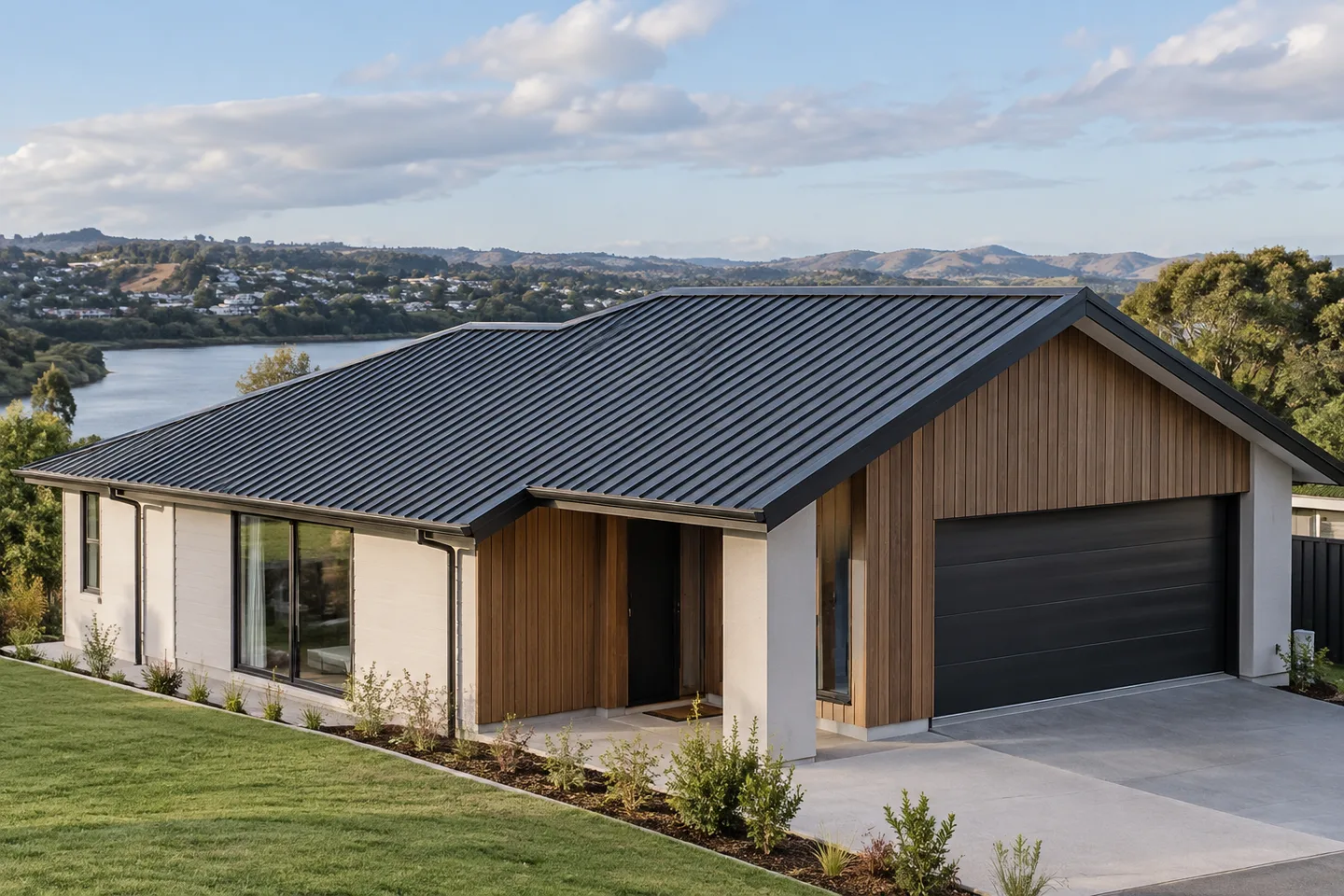
Coordinate the roof specification, structure and installation sequence with your new build.
View service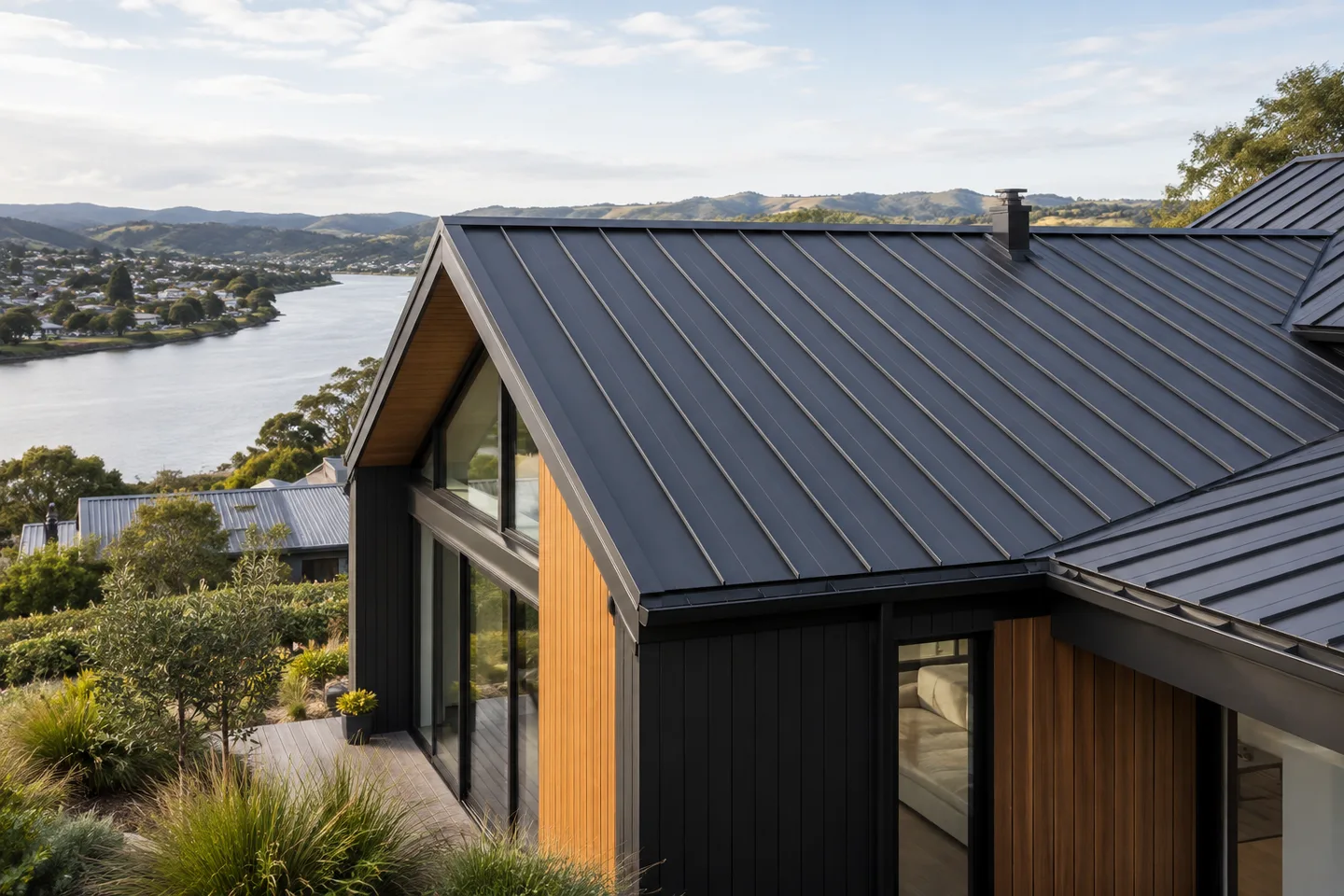
Compare profiles, coatings and roof details for a considered metal roofing specification.
View serviceYour home. The next chapter.
Start with your suburb, your roof concerns and what you want to achieve.