Care & repairs
Whanganui Guide: Signs Your Gutters Need Replacing
Distinguish a blocked outlet or isolated joint defect from gutter deterioration that needs a wider scope.
06 880 1066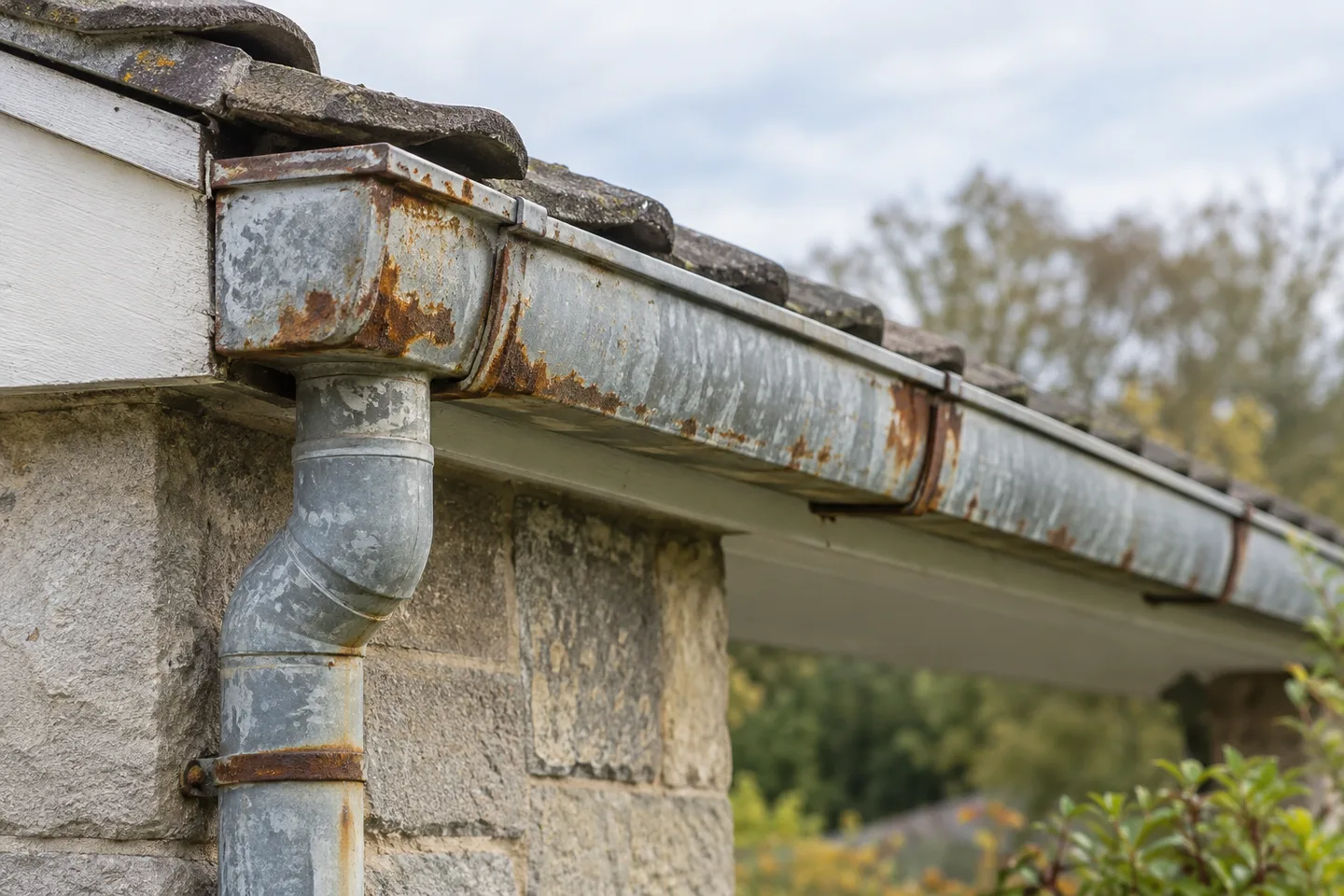
Let’s start with your property
Start with the right question.
Overflow does not automatically mean new gutters are required. A useful assessment separates debris, repairable components and deterioration across the system before comparing a local repair with replacement.
Connect this guide with Whanganui gutter replacement to explore the assessment, work boundaries and practical questions for your property.
A clear scope. The right questions.
A considered next step.
01 /
Record where water escapes
Observe from a safe ground-level position during rain. Note whether water spills along a whole run, at one corner or beside a downpipe. Describe the rainfall and whether the same place overflows repeatedly. Keep away from loose components and avoid climbing to investigate.
02 /
Check the pattern of deterioration
One leaking joint is different from several corroded lengths or widespread cracking. Ask for photographs showing the surrounding gutter as well as the obvious defect. Repeated patches may justify a wider assessment, but the number of repairs alone does not determine the appropriate replacement boundary.
03 /
Look at the supporting fascia
Sagging guttering or loose brackets can involve the timber or other material behind them. Replacing the gutter without assessing its support can leave part of the problem unresolved. Confirm whether fascia repairs, painting and bracket replacement are included or separately priced.
- Loose or displaced brackets
- Staining behind the gutter
- Sections that sag compared with adjoining runs
04 /
Follow the outlet and downpipe
A clear gutter still needs an appropriate route for its water. Ask whether the outlet, downpipe or receiving drain needs investigation. Enlarging the gutter is not a substitute for understanding a downstream restriction. Assign responsibility for any design or drainage work separately.
05 /
Compare a repair with a complete run
Ask what can remain in service and how repaired or replacement sections will join it. A complete run may make sense where several parts have deteriorated, while a sound system may need only a defined repair. Compare removal, supports, fittings, drainage boundaries and finishing in both proposals.
Keep the next step informed
A few final questions.
Explore gutter replacementSources checked 9 September 2026NZ Metal Roofing Manufacturers: Code of PracticeWorkSafe: working at height
General planning information. Product and site-specific requirements should be checked for the actual work.
Will cleaning stop overflow?
It may help where debris is the cause. Recurring overflow after clearing deserves assessment of alignment, outlets and downstream connections.
Should gutters and fascia be replaced together?
That depends on their condition. Have both assessed and keep their scopes separately identified.
Where should I start when applying this guide to my property?
Observe from a safe ground-level position during rain. Note whether water spills along a whole run, at one corner or beside a downpipe. Describe the rainfall and whether the same place overflows repeatedly. Keep away from loose components and avoid climbing to investigate.
What details should I discuss with the contractor?
One leaking joint is different from several corroded lengths or widespread cracking. Ask for photographs showing the surrounding gutter as well as the obvious defect. Repeated patches may justify a wider assessment, but the number of repairs alone does not determine the appropriate replacement boundary.
What else should I consider before deciding on the work?
Sagging guttering or loose brackets can involve the timber or other material behind them. Replacing the gutter without assessing its support can leave part of the problem unresolved. Confirm whether fascia repairs, painting and bracket replacement are included or separately priced.
What should I include in my project checklist?
Ask what can remain in service and how repaired or replacement sections will join it. A complete run may make sense where several parts have deteriorated, while a sound system may need only a defined repair. Compare removal, supports, fittings, drainage boundaries and finishing in both proposals.
Your home. The next chapter.
Let’s get your roof right.
Start with your suburb, your roof concerns and what you want to achieve.