Flow-path assessment
Review gutter runs, falls, outlets and downpipe routing.
Roof drainage
Consider gutters, outlets, downpipes and fascia together to understand roof drainage problems.
06 880 1066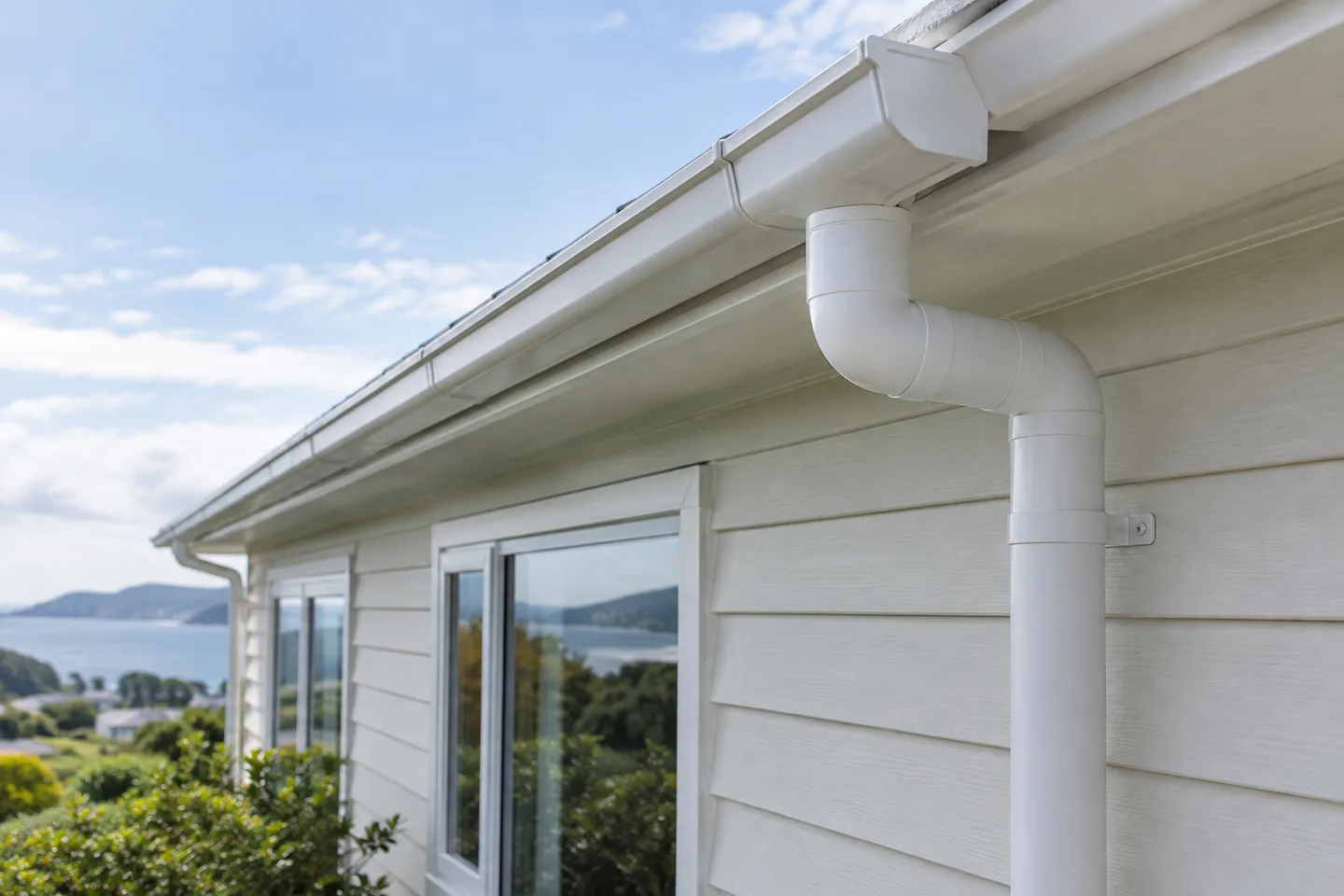
Let’s start with your property
Spouting and downpipes do the unglamorous but critical job of getting roof water away from your house before it finds its way into walls or foundations. Whanganui spouting and downpipes covers new installation, replacement and repair across the common spouting profiles, sized correctly for your roof area and the rainfall intensity Whanganui typically sees. We check fall, outlet placement and downpipe sizing during installation, since undersized or poorly graded spouting is one of the most common causes of overflow during heavy rain. Whether you're re-roofing and need matching new spouting, replacing rusted or sagging sections, or adding downpipes to handle a roof extension, we size and specify to actual water volume rather than a generic standard size. Getting this right protects cladding, foundations and landscaping from water damage that's expensive to fix after the fact.
A clear scope. The right questions.
A considered next step.
Start with an observation
01Water spilling over gutters in rainOverflow sends water straight down your cladding and into the ground beside the foundations, where the damage is slow, hidden and expensive. Whanganui spouting and downpipes resolve whether the cause is blockage, fall, outlet size or simple capacity.
02Sagging spouting or leaking jointsA sagging run holds standing water, which accelerates corrosion and pulls harder on already-failing brackets. Whanganui spouting and downpipes restore correct fall and secure fixing, so the system drains as intended instead of degrading faster each season.
03Staining or soft timber around fasciaSoft or stained fascia means water has been escaping the gutter for some time, and the timber supporting your brackets is losing strength. Whanganui spouting and downpipes address the leak and the damaged support together, rather than one at a time.
04Loose downpipes or water collecting near an outletWater pooling at an outlet or against a wall undermines paths, foundations and cladding rather than draining away. Whanganui spouting and downpipes correct the connection and the discharge point, so roof water is carried properly clear of the building.
Scope notebook
Review gutter runs, falls, outlets and downpipe routing.
Specify which lengths, brackets, outlets and fittings are included.
Identify whether supporting timber needs separate repair.
Clarify the connection point and any work for a drainlayer.
Why work with us
We calculate spouting and downpipe capacity against the roof area and the rainfall Whanganui genuinely sees, rather than fitting a standard size and hoping it copes in a downpour.
Overflow often starts downstream. We check gutter, fall, outlet and downpipe through to the discharge point, so the cause is fixed instead of the most visible symptom.
Brackets only hold if the board behind them is sound. We assess supporting timber as part of the work, so new spouting keeps its fall for years.
Discharge points are planned so roof water leaves the building rather than soaking into foundations, paths or garden beds, which is where the slow and expensive damage happens.
Two ways to frame the work
A joint or bracket repair may be reasonable where the remaining run is sound.
Consider when deterioration, poor alignment or repeated joint failures affect the whole length.
What to expect on site
Installing or replacing spouting and downpipes generally involves ladder access around the full perimeter of your roofline, so expect activity moving progressively around the house rather than staying in one spot. We'll confirm material delivery and storage, along with access needed for any garden beds or paths directly under the work area. Noise is low to moderate, mostly from cutting and fixing sections into place.
This work can often proceed in light rain since it's largely external fixing work, but heavy rain or high wind makes ladder work unsafe, so we'll pause if conditions turn. We'll confirm the schedule with you once we've assessed your roof area and sized the spouting and downpipes correctly for it.
Questions about spouting & downpipes
Use these answers to prepare a brief for your property and clarify the proposed work.
Maintaining Gutters & DownpipesNot necessarily. Blockage, falls, outlet position and downstream restrictions need assessment before resizing.
Only if it is explicitly in the scope. Rotten or unsuitable supporting timber can require separate work.
The destination must be appropriate for the property and applicable requirements. Confirm drainage changes with the relevant designer, council or drainlayer.
Flow-path assessment: Review gutter runs, falls, outlets and downpipe routing. Replacement boundaries: Specify which lengths, brackets, outlets and fittings are included. Fascia condition: Identify whether supporting timber needs separate repair. Drainage connection: Clarify the connection point and any work for a drainlayer.
Repair an isolated defect: A joint or bracket repair may be reasonable where the remaining run is sound. Replace a complete run: Consider when deterioration, poor alignment or repeated joint failures affect the whole length.
Downpipe changes can affect access paths and drainage connections. Tell the assessor about rainwater tanks, tight side passages and gardens below the eaves. Include fascia condition and drainage changes in your brief so the appropriate trades and scope can be agreed.
Connected to spouting & downpipes
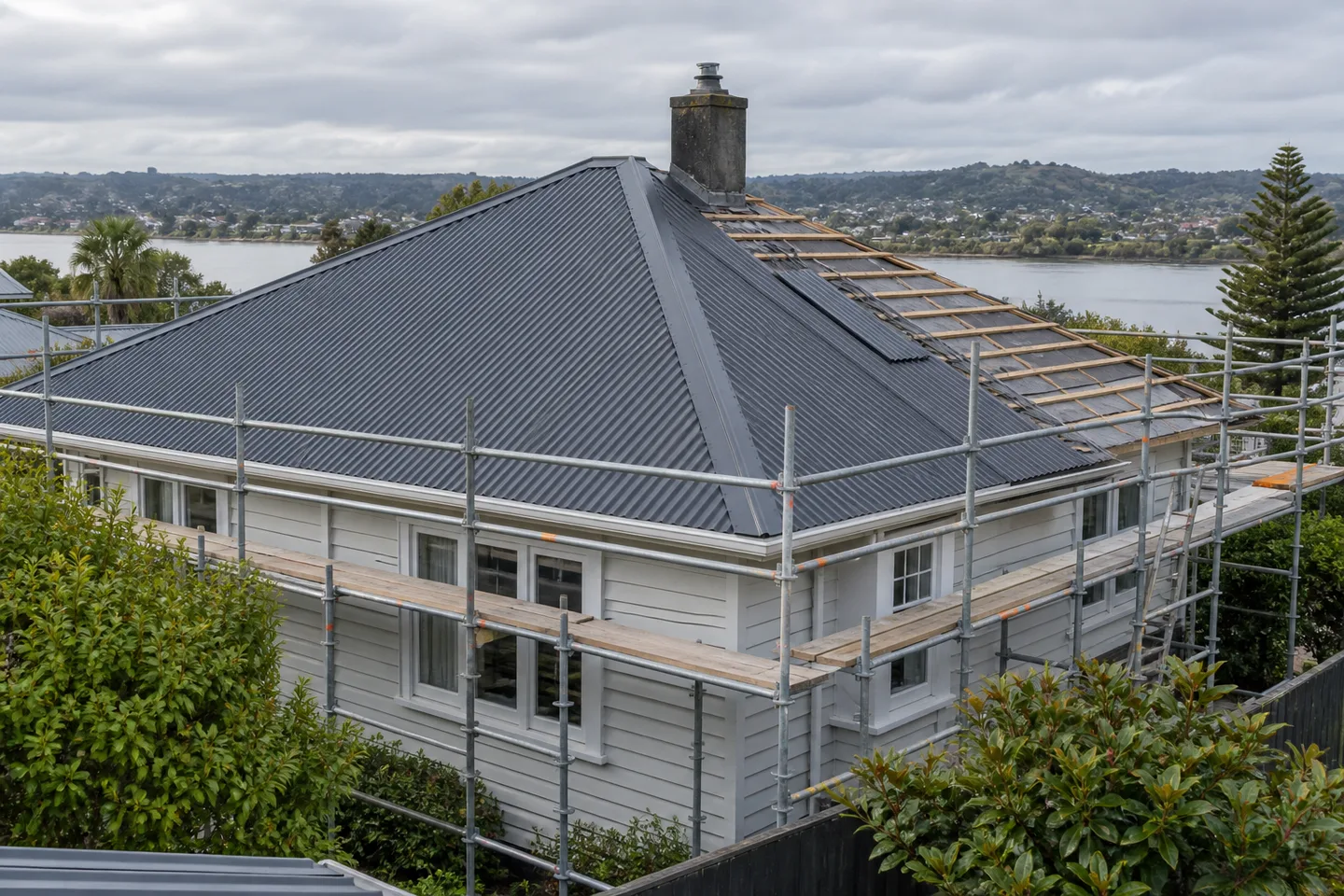
Plan a re-roof around the condition of your existing roof, the right materials and everyday life at home.
View service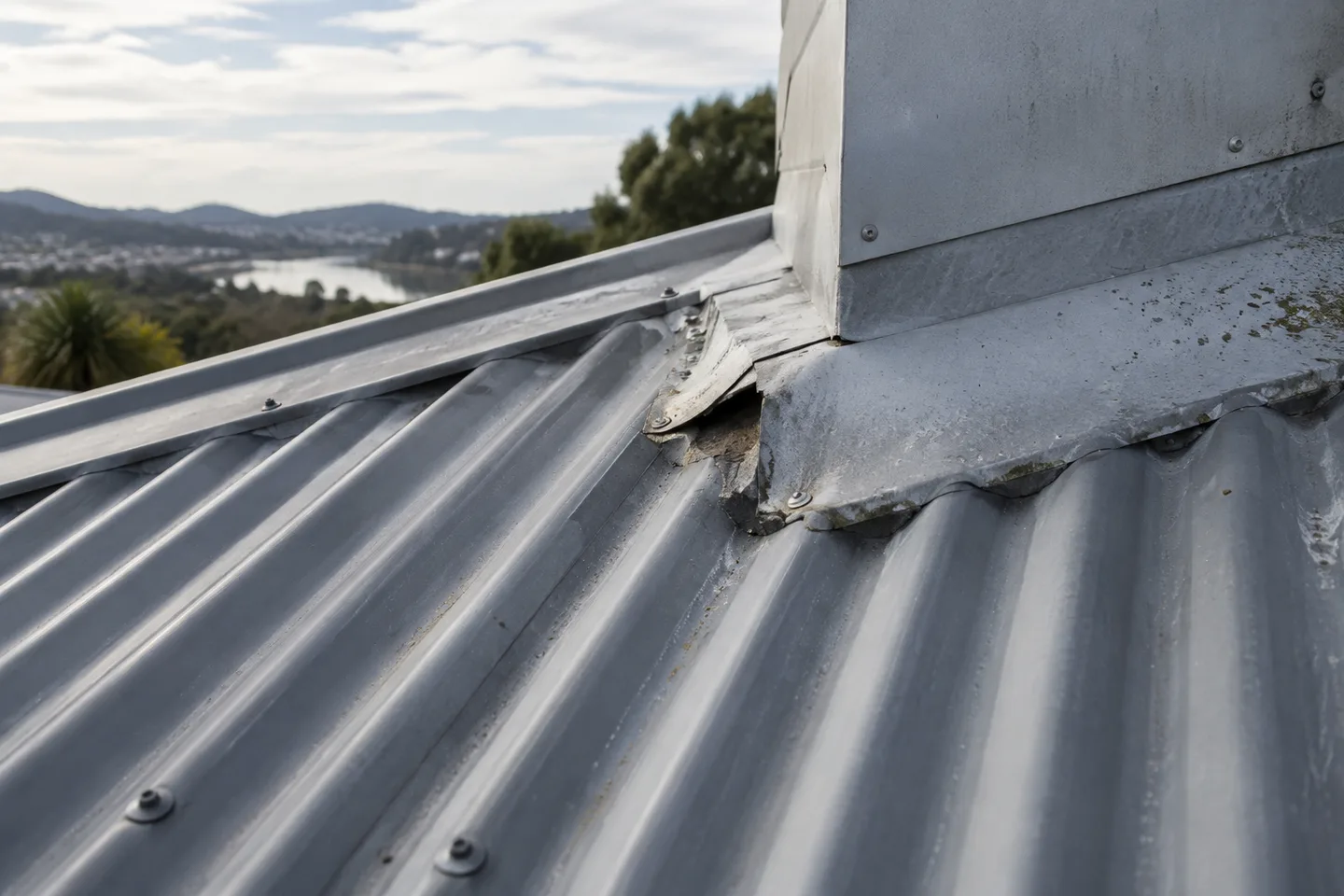
Understand leaks, damaged sheets and tired junctions before choosing a targeted repair.
View service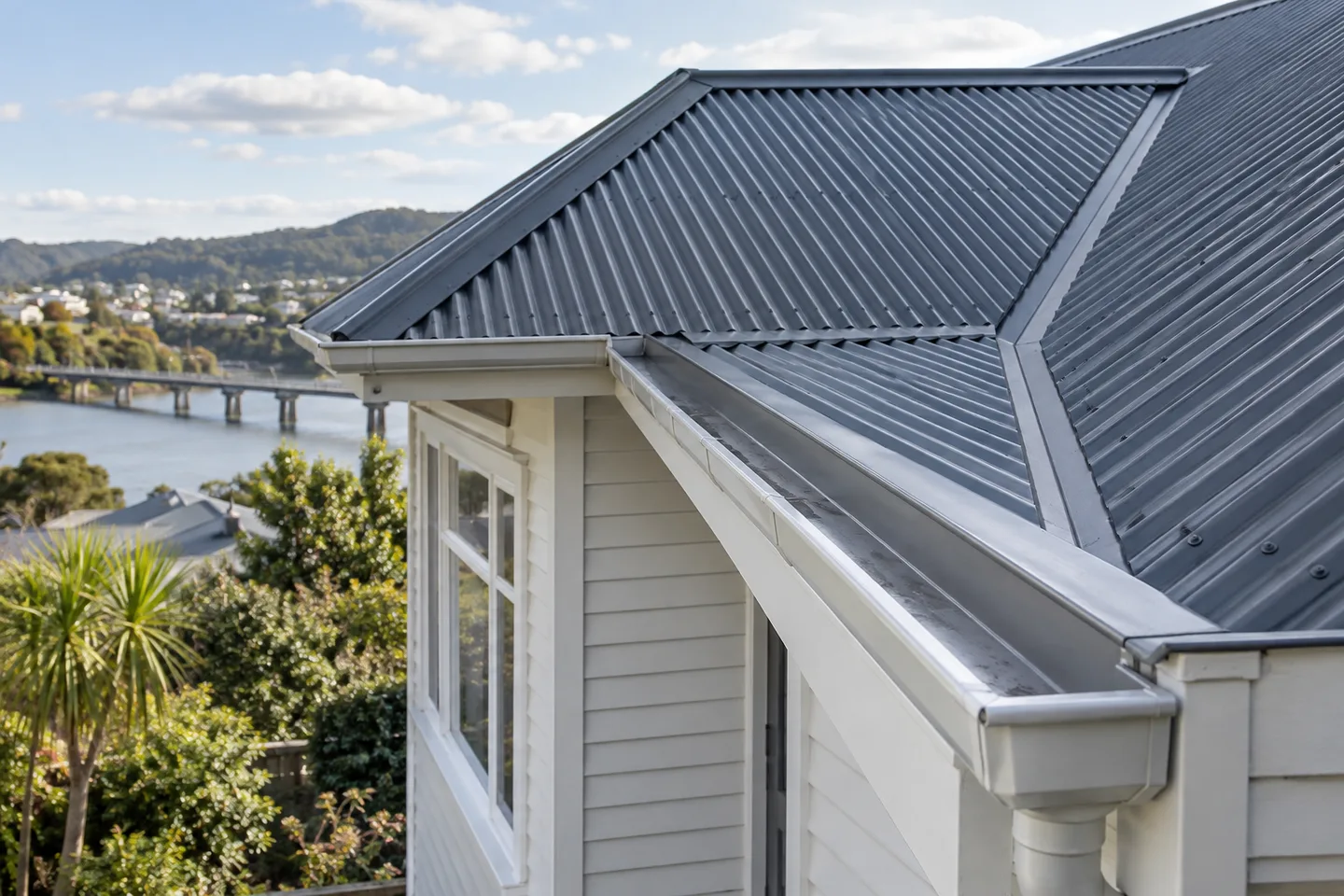
Build a practical picture of roof condition and prioritise maintenance before committing to major work.
View serviceYour home. The next chapter.
Start with your suburb, your roof concerns and what you want to achieve.