Care & repairs
Whanganui Guide: Understanding Roof Leaks
What to record when water appears, and why the entry point may be elsewhere.
06 880 1066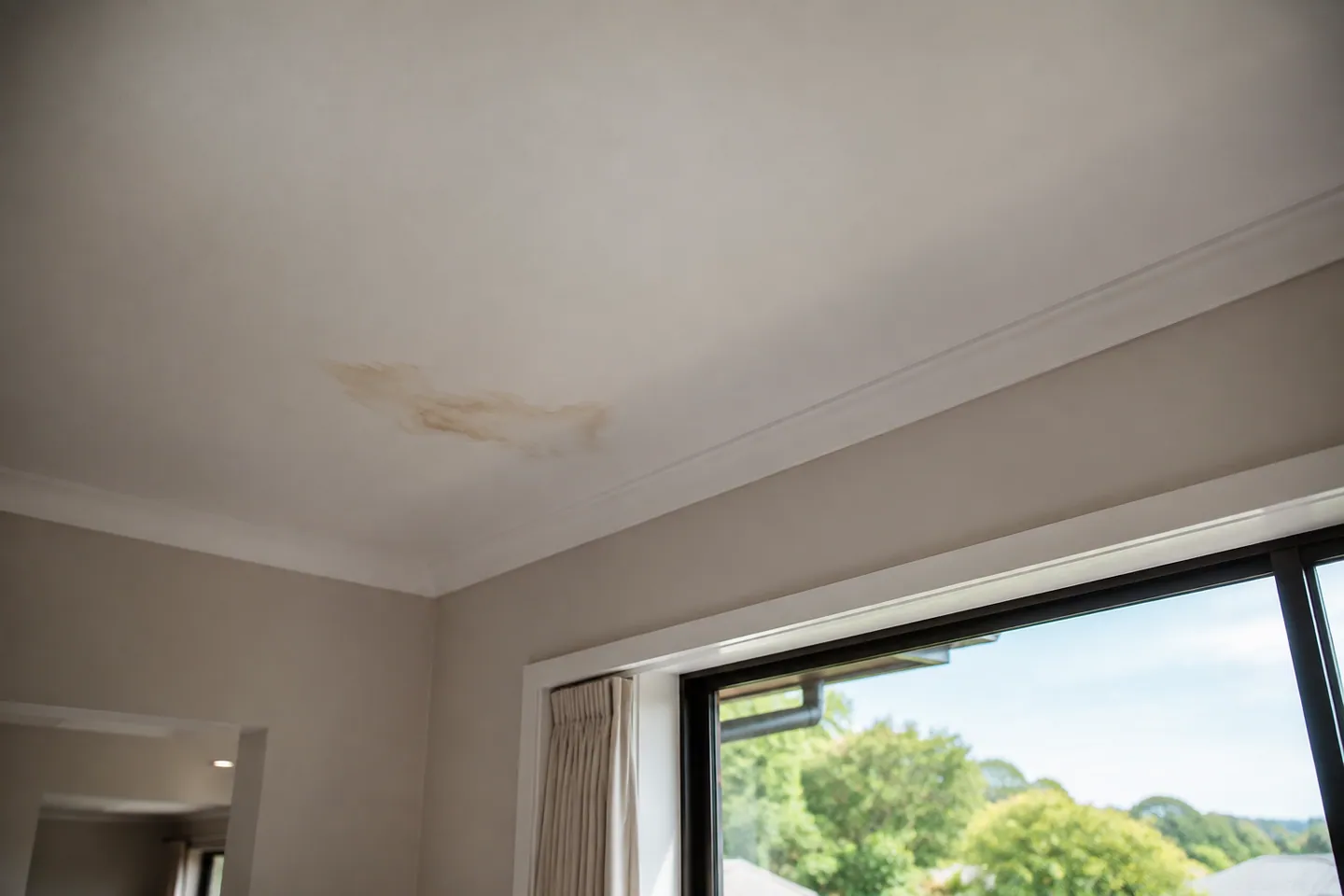
Let’s start with your property
Start with the right question.
Water can travel along roof elements before showing inside. Useful observations help an assessor investigate, but a stain alone cannot identify the failed component.
The next step in understanding roof leaks is a clearly defined repair investigation that follows the symptoms and checks the surrounding roof.
A clear scope. The right questions.
A considered next step.
01 /
Record the pattern
Note the affected room, time, wind direction if known and whether the water appears during rain or afterwards. Keep photographs of changes taken from a safe indoor or ground-level position.
02 /
Consider more than the roof sheets
Flashings, penetrations, blocked drainage and adjoining walls can be relevant. Moisture from condensation or plumbing may also need consideration. The investigation should follow evidence instead of assuming one cause.
03 /
Keep people clear of hazards
Avoid wet electrical fittings and unstable or sagging ceiling areas. Keep people away and arrange appropriate help. Do not climb onto a wet roof or disturb unknown materials to search for an entry point.
04 /
Distinguish containment from repair
A temporary measure may manage the immediate symptom without correcting its source. Ask what it is intended to do, its limits and how the permanent investigation will follow.
05 /
Review after the work
Keep the diagnosis and repair record. Report any recurrence with the weather conditions and location. Drying or decorating an interior surface does not prove the water entry has been resolved.
- Before-and-after observations
- Repair area and materials
- Areas not inspected
- Agreed next steps if water returns
Keep the next step informed
A few final questions.
Explore roof repairsSources checked 7 September 2026WorkSafe: working at heightWorkSafe: check for asbestos before roof cleaning
General planning information. Product and site-specific requirements should be checked for the actual work.
Why is the stain far from the suspected leak?
Water may travel before it becomes visible. The relationship needs checking on site.
Should I waterblast the roof first?
No. Cleaning is not a diagnosis, and unknown older roofing may contain asbestos. Have suspect materials assessed before disturbance.
Where should I start when applying this guide to my property?
Note the affected room, time, wind direction if known and whether the water appears during rain or afterwards. Keep photographs of changes taken from a safe indoor or ground-level position.
What details should I discuss with the contractor?
Flashings, penetrations, blocked drainage and adjoining walls can be relevant. Moisture from condensation or plumbing may also need consideration. The investigation should follow evidence instead of assuming one cause.
What else should I consider before deciding on the work?
Avoid wet electrical fittings and unstable or sagging ceiling areas. Keep people away and arrange appropriate help. Do not climb onto a wet roof or disturb unknown materials to search for an entry point.
What should I include in my project checklist?
Keep the diagnosis and repair record. Report any recurrence with the weather conditions and location. Drying or decorating an interior surface does not prove the water entry has been resolved. Before-and-after observations Repair area and materials Areas not inspected Agreed next steps if water returns
Your home. The next chapter.
Let’s get your roof right.
Start with your suburb, your roof concerns and what you want to achieve.