Care & repairs
Whanganui Guide: Why Roof Flashings Matter
Understand the roof junctions around walls, chimneys, ridges and openings before discussing a repair.
06 880 1066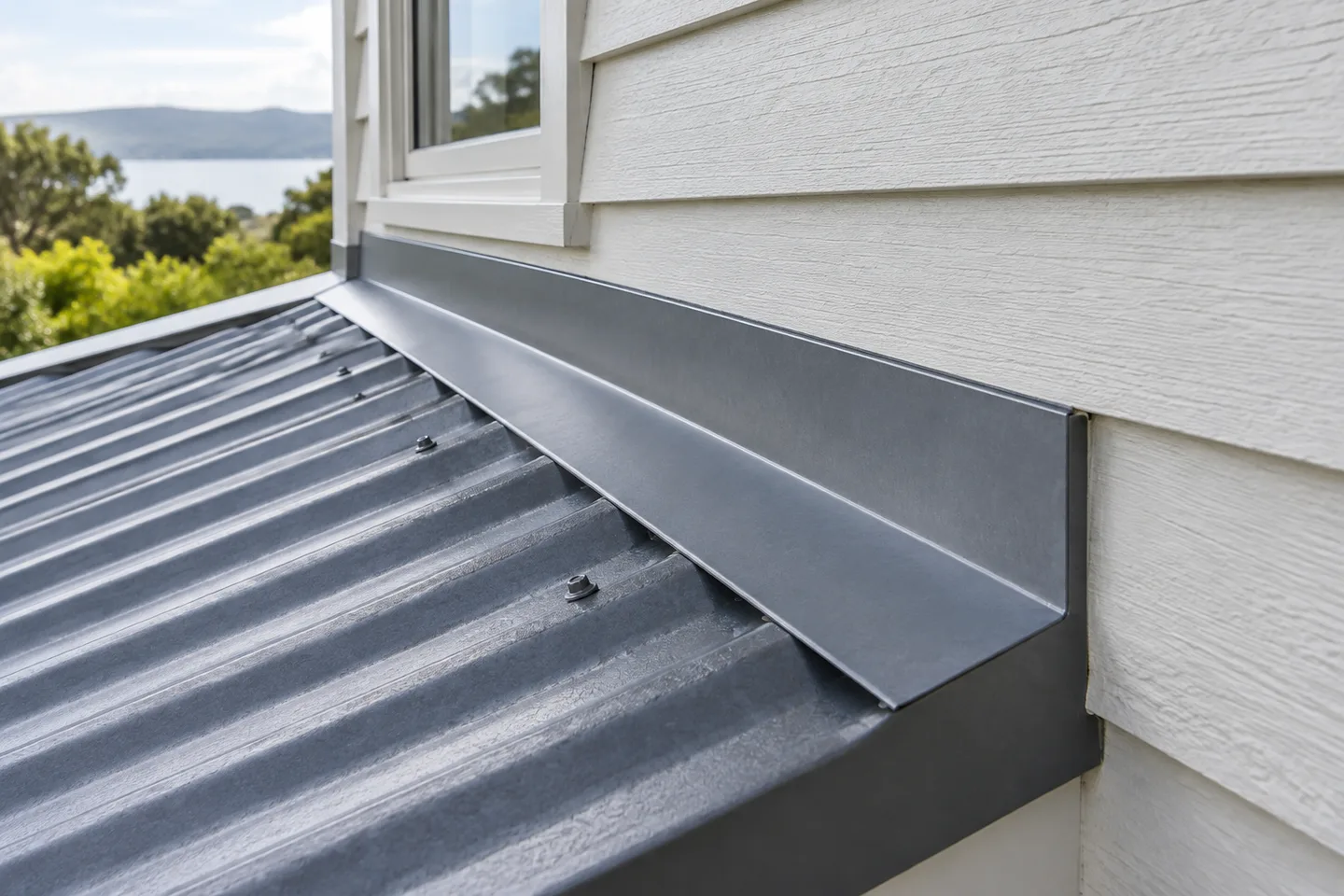
Let’s start with your property
Start with the right question.
Flashings connect roof coverings to edges, adjoining roof planes and other building features. Understanding where they sit helps you describe a concern and ask what a proposed repair includes.
Connect this guide with Whanganui roof flashing repairs to explore the assessment, work boundaries and practical questions for your property.
A clear scope. The right questions.
A considered next step.
01 /
Identify the junction being discussed
Ridge caps sit where roof planes meet at the top. Barge flashings finish a verge, while apron flashings form roof-to-wall connections. Chimneys and pipe openings have their own interfaces. Ask the assessor to identify the affected detail in a photograph so everyone is discussing the same location.
02 /
Look at the materials on both sides
A flashing works with adjoining sheets, wall cladding or masonry. Replacing it cannot resolve every defect in those surrounding materials. Ask whether they are serviceable and whether any need removal, repair or reinstatement as part of achieving a sound junction.
- Roof sheets beside the flashing
- Wall or chimney condition
- Support and attachment points
03 /
Ask how water moves through the detail
The position of a junction determines which roof areas drain towards it and how water leaves it. The proposed detail should suit the specific roof system and building geometry. Have dimensions and fixing arrangements checked by the appropriate designer or supplier rather than copying an unrelated roof.
04 /
Understand previous patching
Old sealant may show that a junction has received attention, but its presence does not establish the original fault. Ask whether the proposal corrects the underlying detail or provides temporary containment. Keep the purpose, boundaries and limits of the chosen approach in writing.
05 /
Include access and reinstatement
A small flashing can require substantial access work or removal of nearby cladding. Clarify who handles wall finishes, masonry and other-trade work. Request completion photographs and retain the material specification so a future inspection can distinguish the repaired area from the original installation.
Keep the next step informed
A few final questions.
Explore flashings & ridge repairsSources checked 9 September 2026NZ Metal Roofing Manufacturers: Code of PracticeWorkSafe: working at height
General planning information. Product and site-specific requirements should be checked for the actual work.
Does a leak near a chimney always mean failed flashing?
No. The investigation should consider the chimney itself and adjoining roof. An indoor stain alone does not identify the entry point.
Should all flashings be replaced during re-roofing?
Ask which components will remain, how they connect to the new covering and why they are suitable. The scope should identify them explicitly.
Where should I start when applying this guide to my property?
Ridge caps sit where roof planes meet at the top. Barge flashings finish a verge, while apron flashings form roof-to-wall connections. Chimneys and pipe openings have their own interfaces. Ask the assessor to identify the affected detail in a photograph so everyone is discussing the same location.
What details should I discuss with the contractor?
A flashing works with adjoining sheets, wall cladding or masonry. Replacing it cannot resolve every defect in those surrounding materials. Ask whether they are serviceable and whether any need removal, repair or reinstatement as part of achieving a sound junction.
What else should I consider before deciding on the work?
The position of a junction determines which roof areas drain towards it and how water leaves it. The proposed detail should suit the specific roof system and building geometry. Have dimensions and fixing arrangements checked by the appropriate designer or supplier rather than copying an unrelated roof.
What should I include in my project checklist?
A small flashing can require substantial access work or removal of nearby cladding. Clarify who handles wall finishes, masonry and other-trade work. Request completion photographs and retain the material specification so a future inspection can distinguish the repaired area from the original installation.
Your home. The next chapter.
Let’s get your roof right.
Start with your suburb, your roof concerns and what you want to achieve.